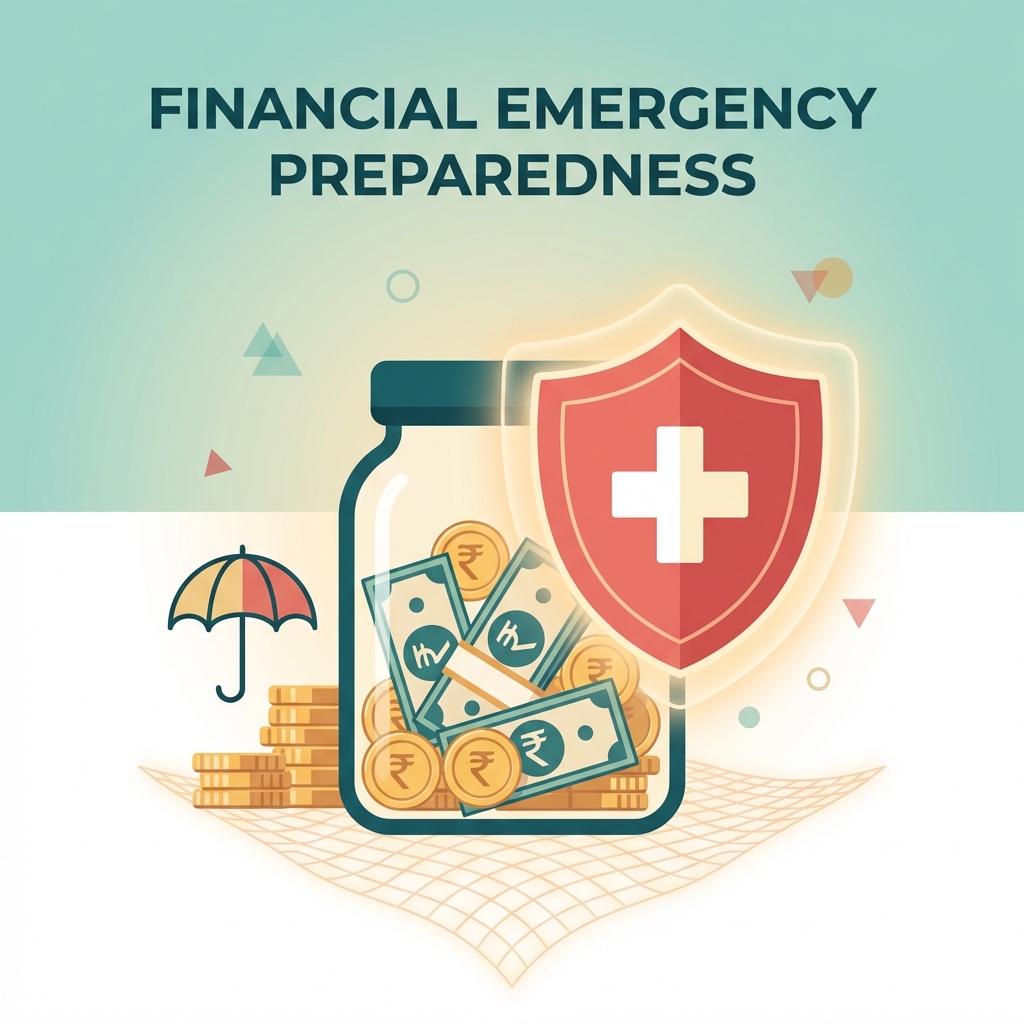
Life has a funny way of throwing curveballs when you least expect them. A sudden medical bill, an unexpected car repair, or a temporary job loss—these are the "rainy days" that can wash away years of careful financial planning.
In the world of personal finance, there is one tool that stands above all others as the first line of defense: the Emergency Fund. It is the literal "Sleep-at-Night" money that ensures a temporary crisis doesn't turn into a permanent debt trap. Before you invest in mutual funds or pay extra EMIs, build this shield first.
The Core Concept
An emergency fund is a stash of money set aside specifically to cover life’s unexpected expenses. It is not for a new car, a vacation, or a wedding. It is a dedicated pool of cash that stays liquid and accessible for only three things:
- Medical emergencies (that Health Insurance doesn't cover, like co-pays or non-medical expenses).
- Job loss (living expenses while you hunt for new opportunities).
- Critical repairs (Home/Car breakdown that can't wait).
The Golden Rule: 3 to 6 Months
A common question is: "How much should I keep?" The standard recommendation for an Indian middle-class household is 3 to 6 months of essential living expenses.
The Calculation
Rent + Food + Utilities + EMIs + School Fees = Cost of Living.
If your monthly cost is ₹50,000, your Emergency Fund should be ₹1.5 Lakhs to ₹3 Lakhs. Use our Emergency Fund Calculator to find your exact number.
Where to Park It?
The goal of an emergency fund is Safety and Liquidity, not high returns. You should park this money where it can be reached in minutes, not days.
- Savings Account: Keep 1 month's expenses here for instant access via UPI or ATM.
- Sweep-in FD: Keep the rest here. It earns FD interest but breaks automatically if you need cash.
- Liquid Mutual Funds: Good for earning slightly more, but redemption takes 24 hours. Only use if you have multiple layers of emergency cash.
Important: Don't park your emergency fund in stocks, equity mutual funds, or crypto. You need this money to be safe and liquid, not growing aggressively. That's what your SIP investments are for.
Key Takeaway
Investment experts always talk about "Return on Investment" (ROI). But in the journey of life, the "Return on Peace of Mind" is far more valuable. Build your shield before you build your castle.
Your emergency fund is the foundation of financial independence. Without it, you're one crisis away from wiping out your net worth or falling into credit card debt. Start building it today using the 50/30/20 rule where the 20% savings first goes to your emergency fund, then investments.
Remember: Your emergency fund isn't about making money—it's about protecting the money you've already made and avoiding costly financial mistakes when life throws curveballs.