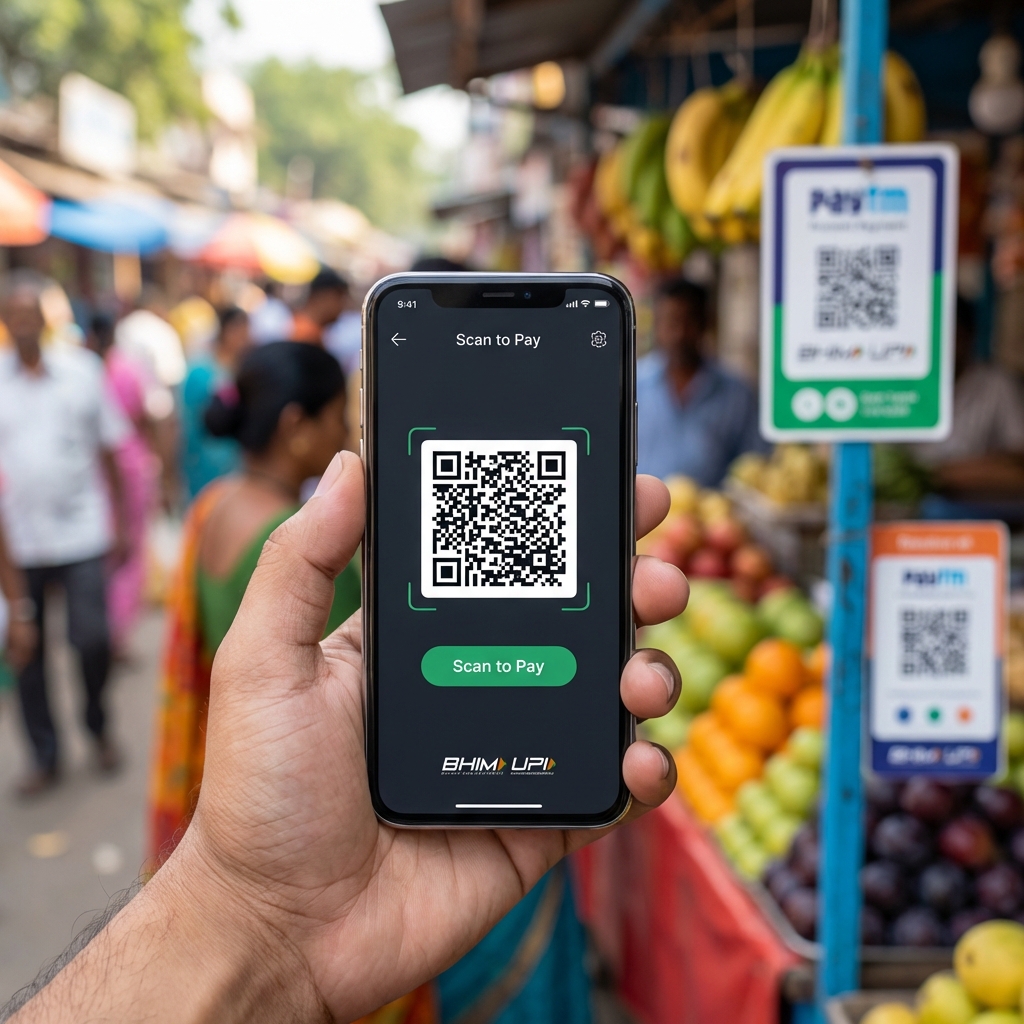
Not long ago, if you wanted to send money to a friend in India, you needed their 16-digit account number, their bank's IFSC code, and a lot of patience. You had to add them as a "beneficiary" and wait for hours before the first transaction could clear. Understanding NEFT, RTGS, and IMPS was essential just to send money.
Today, you simply ask for their phone number or scan a small square of black-and-white patterns—a QR code. Within seconds, the money moves from your savings account to theirs. This magic is powered by UPI (Unified Payments Interface), a system that has made India the global leader in real-time digital payments.
The Core Concept: What Is UPI?
Developed by the National Payments Corporation of India (NPCI), UPI is a system that powers multiple bank accounts into a single mobile application (of any participating bank), merging several banking features, seamless fund routing & merchant payments into one hood.
In simple UPI meaning, it is a protocol that allows different banks to talk to each other instantly. It eliminates the need for physical cash or cumbersome bank details for small and large everyday transactions. This is a cornerstone of modern personal finance management in India.
How It Works: No More IFSC Codes
The genius of UPI lies in the Virtual Payment Address (VPA) or UPI ID. Think of it like an email address for your money (e.g., yourname@okaxis or yourphone@upi). Once you link your bank account to a UPI app like BHIM, PhonePe, or Google Pay, your VPA becomes your unique identity.
The 2-Factor Authentication
Despite being lightning-fast, UPI is extremely secure. It uses two factors of authentication:
- Your Device: The app is tied to your physical smartphone and verified mobile number.
- Your UPI PIN: A 4 or 6-digit code that only you know, required for every outgoing transaction.
Why Has India Embraced UPI?
The growth of UPI in India has been nothing short of a revolution. Several key benefits contributed to this:
- Instant 24/7 Transfers: Unlike NEFT or RTGS, which have specific bank hours, UPI works 365 days a year, even on Sundays and holidays.
- Interoperability: You can use a PhonePe QR code to pay from your BHIM app, or a Google Pay ID to receive money in your Paytm account. It is a truly open system.
- Zero Transaction Fees: For the average consumer, using UPI for person-to-person or person-to-merchant payments is currently free. This helps you follow the 50/30/20 rule by reducing transaction costs.
- Privacy: You don't need to share your sensitive bank account number or branch details with anyone; your UPI ID is enough.
UPI Safety: Protecting Your Hard-Earned Money
While the technology is secure, scammers often target the "human factor." To stay safe, always remember these three Golden Rules of UPI:
- PIN is for Paying, Not Receiving: You never need to enter your UPI PIN to receive money. If someone asks you to enter your PIN to "accept a payment," it is a scam. Learn more about avoiding money mistakes.
- Verify the Name: Before you hit 'Send', modern UPI apps show you the legal name of the person or merchant. Check it carefully.
- Avoid Random Links: Never click on payment links sent via SMS or WhatsApp from unknown numbers. Protect yourself from digital fraud.
The NPCI isn't stopping at simple transfers. New features like UPI Lite (for small offline payments) and UPI Auto-Pay (for recurring bills) are further simplifying our lives. This is just the beginning of the Digital Banking revolution in India.
The Pulse of a Digital India
UPI is more than just a payment app; it is the pulse of a new, digital-first India. It has empowered the street-side vendor and the corporate professional alike. By understanding how to use it safely and effectively, you aren't just making a payment—you are participating in one of the world's most advanced financial ecosystems.
Use UPI to streamline your family budget tracking, instantly split bills with friends, pay EMIs, or invest through SIPs. Combined with a savings account, UPI makes managing your net worth and achieving financial independence more convenient than ever.
As India continues its journey toward becoming a cashless economy, mastering UPI isn't optional—it's essential for modern financial literacy and a key component of smart personal finance management.